A practical guide
Living in the house while we build in it.
“Can we stay here while you do it?” is the second question every client asks, straight after the price. Usually the answer is yes — but only if it's planned in at pre-construction stage rather than improvised in week three. Here's what we'll want to agree with you, and what we'll do about it.
What a client actually said
“They made it possible for us to live in the house alongside the works by temporarily replumbing sink and washing machine… They even made a set of steps so our dog could access the garden.”
Janet Lewis · Google
01
Before anything starts
The decisions that make staying put realistic are all taken at pre-construction stage, not once the scaffold is up.
- Agree where the temporary kitchen goes, and what it consists of — most people underestimate how much they miss a sink.
- Agree the temporary plumbing: on one of our kitchen projects we replumbed the sink and washing machine into another room so the family could stay put for the duration.
- Decide which rooms are handed over to us and which stay yours, and where the dust barriers go.
- Work out the route: where we come in and out, where materials land, where the skip sits, where you park.
- Sort the party wall notices early if they apply — they have statutory notice periods and they are the single most common cause of a delayed start.
02
Noise, dust and the honest bits
Nobody enjoys this part. But most of what makes it unbearable is unpredictability, not decibels.
- The loudest weeks are demolition, breaking out floors, chasing walls for services, and cutting structural openings. We can tell you which weeks those are.
- Dust barriers and negative pressure where it matters. It will still get everywhere — but there is a big difference between a sealed working zone and an open house.
- Working hours are set at the start and stick, so you can plan your own week around them.
- The site gets cleared and swept at the end of each day. This is not a courtesy, it is how you keep a job safe and moving.
03
Phasing — doing it in stages
Not every project has to happen in one continuous run. Phasing costs a bit more in time and usually a bit in money, and sometimes it is still the right answer.
- Common split: structure and services first, finishes later, so you get the house back sooner and spread the spend.
- Or floor by floor on a whole-house renovation, so there is always somewhere habitable.
- Or shell-and-core an extension now and fit the kitchen out in six months when the budget recovers.
- We will price the phased and the continuous version and let you choose. The continuous one is almost always cheaper overall — but cheaper is not always the deciding factor.
04
Pets, children and the rest of the household
This is the part builders forget about and clients remember for years.
- Tell us about the dog. On one job we built a temporary set of steps so a client’s dog could still get out into the garden while the levels were being rebuilt — it is in their Google review, which tells you how much it mattered to them.
- Tell us about nap times, night shifts, exams and anyone working from home. We can usually sequence the worst noise around them.
- Gates, latches and open excavations get secured before the team leaves, every day.
- Deliveries are scheduled rather than arriving whenever the supplier fancies — a 7am tipper on a school run morning is an avoidable problem.
05
Security, insurance and the boring paperwork
A house with a hole in the back of it is a different proposition to a locked one.
- Openings are made secure and weathertight at the end of each working day or hoarded properly if they cannot be.
- Tell your home insurer that building work is happening. Most policies require notice, and it costs nothing to be straight with them.
- Agree who holds keys, or whether a key safe is better. Write it down.
- Keep the decisions list live — kitchen and sanitaryware specifications, socket and switch positions, finishes. Every one of those has a lead time attached, and the project WhatsApp group exists so none of them get lost.
06
When moving out is actually the right call
We would rather say this up front than halfway through.
- Whole-house renovations where the heating, water and power are all off at once are genuinely hard to live through.
- Projects where the only bathroom is being rebuilt and there is no second one.
- Structural work that takes out the staircase or a substantial part of a floor.
- If you do move out, the programme usually gets shorter and cheaper — the trades stop working around you. Sometimes the rent is less than the extra weeks.
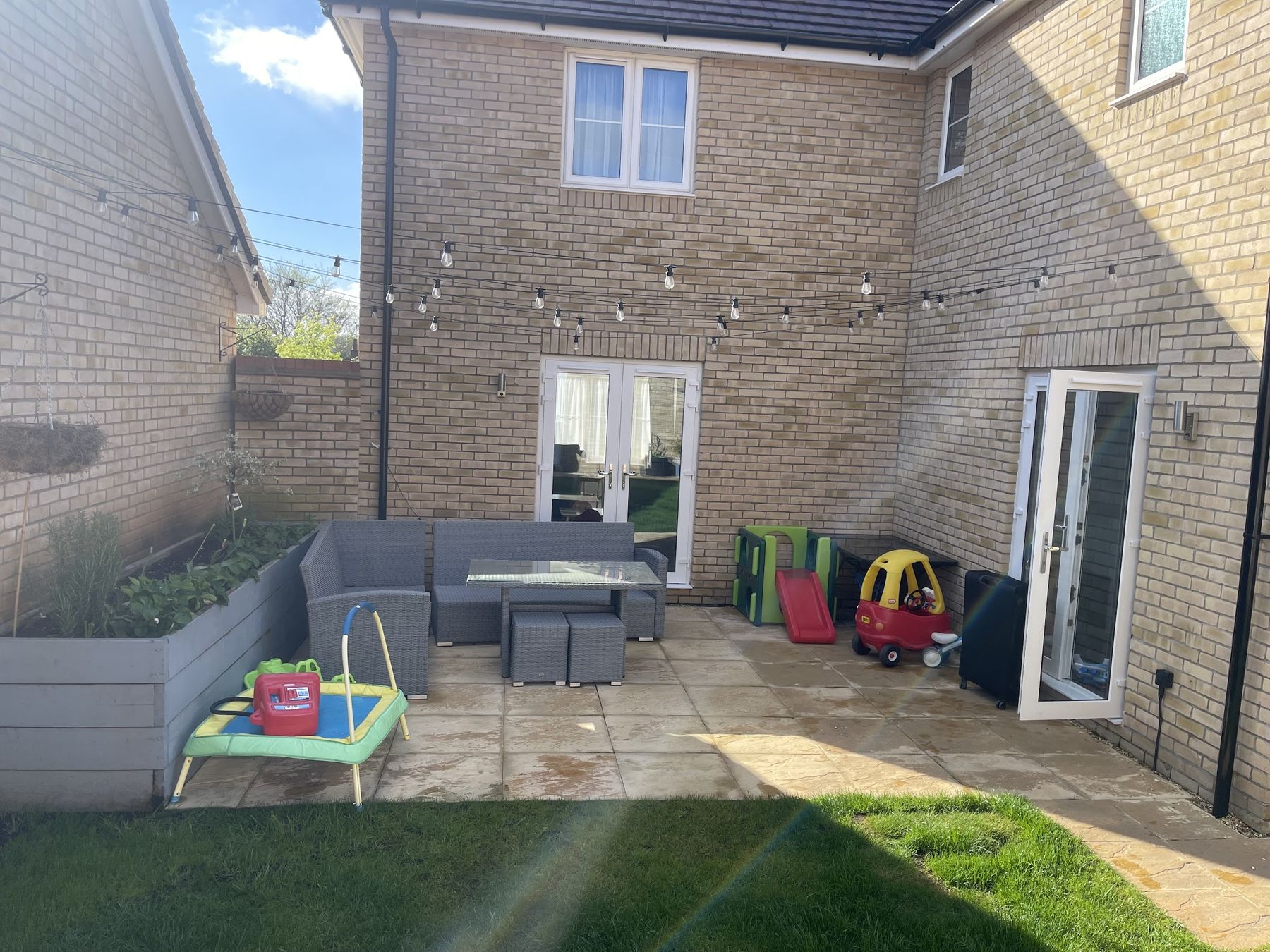
Our own work — the garden put back, the week we left
Want to know whether you could stay put?
Describe the house and the project to Tom or Rob — we'll tell you honestly, at feasibility stage.